
Why SHE?

Let's be honest: SHE Blessings Co. is a weird name.

Why is it capitalized? What does it have to do with baby loss? Maybe there’s the whole she-is-the-pronoun-for-a-woman, but then, why not have it be the possessive pronoun: Her Blessings Co.? 

SHE Blessings Co. was an accident. Originally, we thought it would just be a set of initials—like FBI—that stood for important women in the Bible who had different walks of faith connected to their fertility. After settling on the three women we would use, it happened that, in chronological order, their names spelled out SHE.

Biblical Hope

These are the three women SHE stands for, and why we chose them. 

Sarah

Sarah speaks of how God is faithful, even in our unbelief. She didn't believe God when He told Abraham that she would conceive. In her unbelief and impatience, she even tried to make God's promise come true through Hagar. But, through it all, God had a plan. He did make her the joyous mother of Isaac (who leads to Christ!). He granted her the blessings of being a mother, even when she herself did not believe.
Hannah

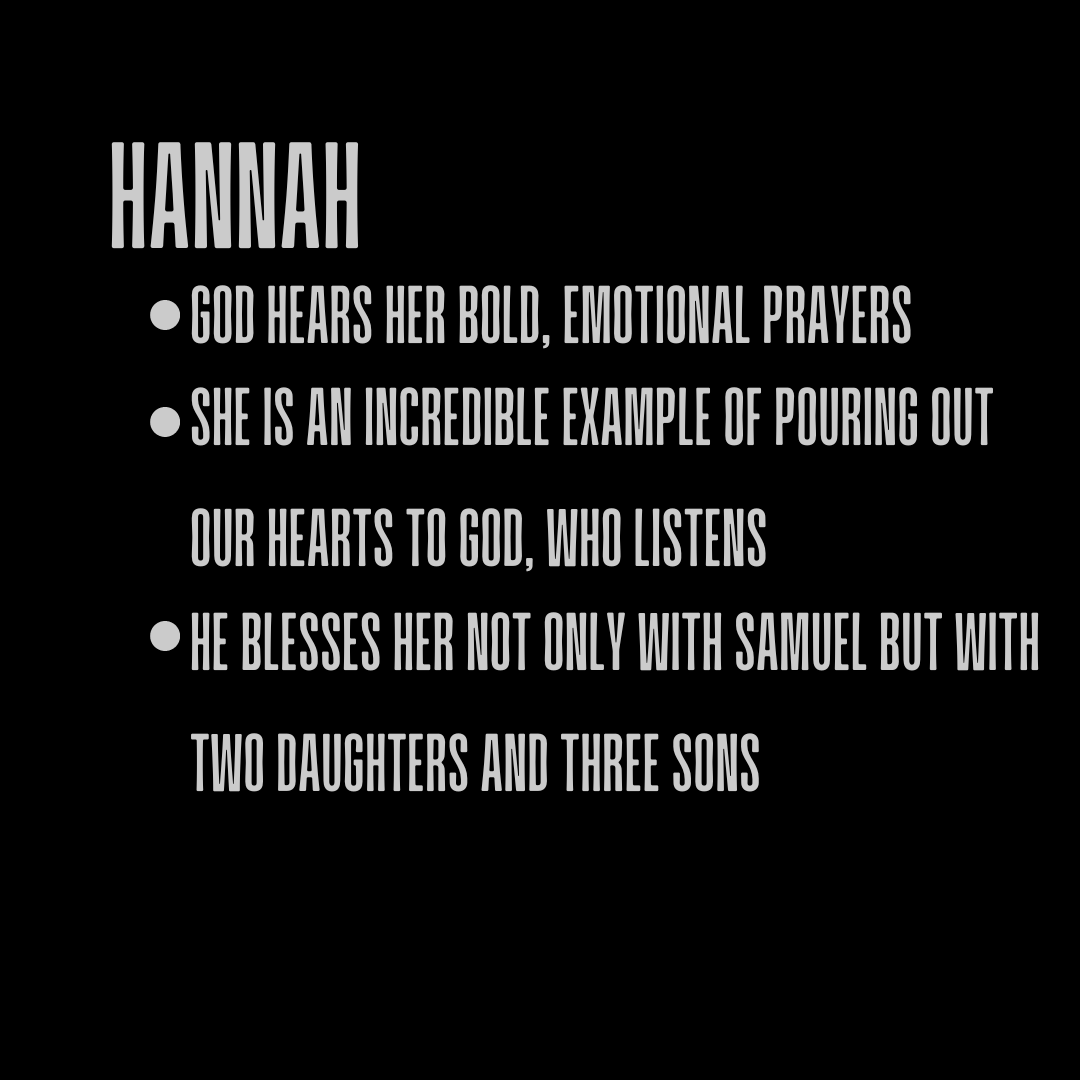
With Hannah, there is the beautiful story of dedicated prayer and faithfulness. She is such an example of pouring our hearts out to God, pleading for children. She was so emotionally honest with God that Eli thought that she was drunk. The Lord heard her prayers, though—and He hears ours, too. He gave Hannah her son Samuel, whom Hannah dedicates in faith to the ministry. God, in His grace, goes on to give Hannah two daughters and three sons. It is pretty rare for us to see God give a barren woman more than one child in the Bible, which adds to this story’s sweetness and rarity.

Elizabeth

Elizabeth's story is a juxtaposition story. It shows how faith can turn to faithlessness through Elizabeth's husband, Zechariah. He prays for a baby, even though Elizabeth is both barren and old, which shows so much faith! God, in His mercy, says yes. But Zechariah doubts God, so he goes mute. Elizabeth, on the other hand, is so grateful and thanks God for His blessing. Her story is a story of impossibility. She is the example that Gabriel gives Mary about how God can do the impossible—and He can. He does. He does the impossible all the time.

We have found a ton of hope in these women’s stories. We have found tons of beauty in how God works through His faithfulness to these women, even though they may have spent significant portions of their lives believing they could not have children. They have inspired us to have faith, pray boldly, and believe in the impossible.

We hope these boxes can do a little bit of the same for you.

Blessings

So SHE has been explained, but why Blessings?

Blessings reflect our heart in this ministry: We want to bless each person at each step of this process.

We want to bless our product partners. We do our best to purchase from small businesses, specifically from women who are blessing their families by having small side businesses. Our goal is to bless these women with our business, paying them for the hard work they do and showing them the fruit of their labors: a bit of hope and healing brought to grieving mothers. 

We want to bless those who order boxes. It can be so difficult to know what to say when someone is in the middle of their heartache. It can be so hard to know what to do. The boxes are a way for people and churches to show their love and care when words aren’t enough. It gives one avenue for them to connect and care for the grieving mothers in their lives and congregations. 

We want to bless the women who receive boxes. Mourning your child is indescribable and different for every mother and father. Our hope and heart is that mothers would be able to find some sort of healing through the boxes. Healing could come from the items in the box (which is part of our desire: we want the boxes to be practical and useful). Healing could also come from being able to feel and see the love of other poured out on them. Baby loss can be so isolating. Getting a thoughtful gift can break through the loneliness and remind mothers that they have a community that loves them, that wants to walk with them, and that sees their pain.